
City Living vs. Suburban Bliss: Which is Right for You?
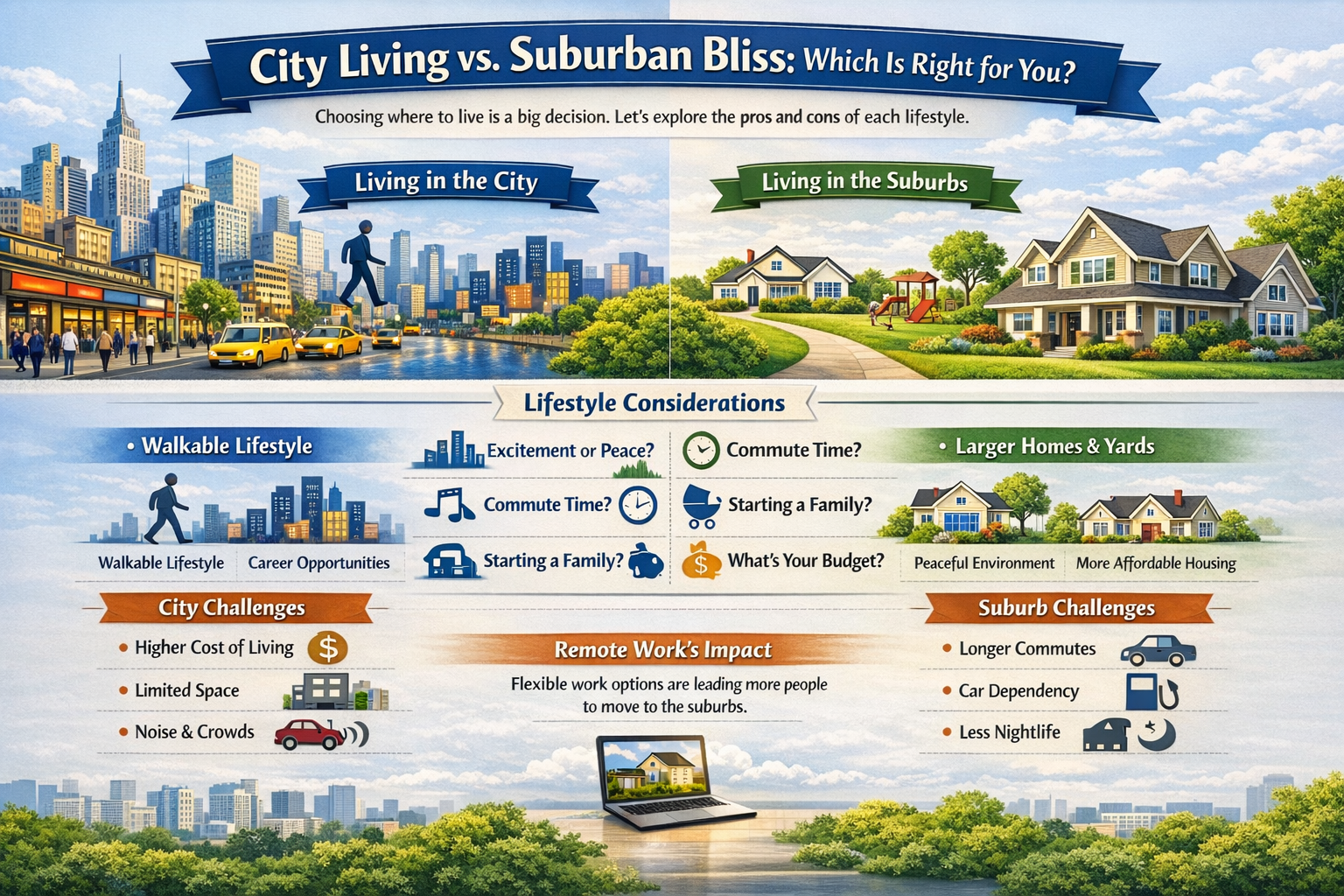
Choosing where to live is one of the most important decisions people make. Some people love the fast energy of a big city. Others enjoy the peace and space of the suburbs. Both lifestyles offer unique benefits, and the best choice depends on your personal goals, budget, and lifestyle.
If you are thinking about buying or selling a home, understanding the differences between city living and suburban living can help you make a smarter decision. At New House Alliance, we work with buyers and sellers every day who are trying to decide which environment fits their life best.
In this guide, we will explore the key differences between city life and suburban life so you can confidently choose the place that feels most like home.
Understanding the Difference Between City and Suburban Living
Before deciding which lifestyle is right for you, it helps to understand what each environment typically offers.
Cities are usually busy and full of activity. They have tall buildings, restaurants, public transportation, and many job opportunities. Everything is often within walking distance.
Suburbs, on the other hand, are quieter residential areas located outside major cities. They typically have more space, larger homes, parks, and a slower pace of life.
Both environments serve different lifestyles, and neither is automatically better. The right choice simply depends on what matters most to you.
The Benefits of Living in the City
City living offers convenience and excitement that many people enjoy. For people who love activity, entertainment, and being close to work, the city can be the perfect place.
Walkable Lifestyle
One of the biggest advantages of living in the city is convenience. Many people can walk to work, restaurants, shops, and entertainment venues. This reduces the need for long commutes and daily driving.
According to the National Association of Realtors, walkability is becoming one of the most important factors for many homebuyers.
Source:
Career Opportunities
Cities often have more job opportunities because many businesses and corporate offices are located there. Industries such as technology, finance, healthcare, and media are usually concentrated in urban areas.
Living close to these workplaces can reduce commuting time and improve work-life balance.
Entertainment and Social Life
Cities offer endless activities. From concerts and sporting events to museums and restaurants, there is always something to do.
For people who enjoy nightlife, culture, and social interaction, city living can feel exciting and vibrant.
Public Transportation Access
Many cities offer strong public transportation systems, including buses, subways, and trains. This makes it easier to move around without needing a car.
Public transit also helps reduce commuting costs and traffic stress.
Challenges of Living in the City
While city life has many benefits, it also comes with challenges that some people find difficult.
Higher Cost of Living
Housing prices in cities are often higher than in suburban areas. Rent, property prices, and everyday expenses can be significantly more expensive.
According to housing market research from U.S. Census housing data, urban areas generally have higher housing costs due to demand and limited space.
Source:
https://www.census.gov/housing
Limited Space
Apartments and condos in cities are usually smaller compared to suburban homes. Outdoor space like yards or gardens is also less common.
For families with children or pets, this can sometimes feel restrictive.
Noise and Crowds
City life often means dealing with traffic, noise, and crowds. Busy streets and constant activity can feel exciting for some people but overwhelming for others.
Why Many People Prefer Suburban Living
Suburbs are known for offering space, comfort, and a quieter lifestyle. Over the past several years, suburban living has become increasingly popular among homebuyers.
Larger Homes and More Space
One of the biggest advantages of suburban living is space. Homes are usually larger, and many properties include backyards, garages, and multiple bedrooms.
This extra space is ideal for families, remote workers, and anyone who enjoys a quieter home environment.
Safer and Family-Friendly Communities
Suburban neighborhoods are often designed with families in mind. Many areas include parks, playgrounds, and highly rated schools.
According to research from the Pew Research Center, many families prefer suburbs because of safety and school quality.
Source:
Peaceful Environment
Suburbs are typically quieter than cities. Streets are less crowded, traffic is lighter, and neighborhoods often feel calmer.
For people who value relaxation and privacy, suburban living can feel much more comfortable.
More Affordable Housing
In many regions, suburban homes offer more space for a lower price compared to city properties. Buyers may find larger homes with yards at prices that would only buy a small apartment in the city.
Challenges of Suburban Living
Although suburban life has many advantages, it also comes with trade-offs that buyers should consider.
Longer Commutes
Many suburban residents commute to nearby cities for work. This can mean longer driving times and daily traffic.
While remote work has made commuting less necessary for some people, it is still an important factor to consider.
Car Dependency
Unlike cities, suburbs usually require a car for daily errands such as grocery shopping, school, or work.
Public transportation options are often limited outside major urban areas.
Less Nightlife and Entertainment
Suburbs are generally quieter and may not offer the same level of entertainment, dining, or nightlife options that cities provide.
For some people, this slower pace is relaxing. For others, it may feel less exciting.
Lifestyle Considerations When Choosing Between City and Suburbs
Choosing the right location is not only about housing prices or square footage. It is about lifestyle.
Here are some important questions to ask yourself when deciding.
Do you prefer excitement or peace?
If you enjoy busy streets, restaurants, and cultural activities, city life may be ideal.
If you prefer quiet evenings and open space, suburban life might feel more comfortable.
Is commute time important?
People who work in city centers may prefer living closer to work.
However, remote workers often find suburban homes more appealing because they offer more space and comfort.
Are you planning to start a family?
Families often prefer suburban neighborhoods because of schools, parks, and safety.
However, many cities now offer family-friendly neighborhoods as well.
What fits your budget?
Housing costs vary greatly depending on location. Buyers should compare not only property prices but also property taxes, transportation costs, and daily expenses.
Choosing the right location is not only about housing prices or square footage. It is about lifestyle.
Here are some important questions to ask yourself when deciding.
Do you prefer excitement or peace?
If you enjoy busy streets, restaurants, and cultural activities, city life may be ideal.
If you prefer quiet evenings and open space, suburban life might feel more comfortable.
Is commute time important?
People who work in city centers may prefer living closer to work.
However, remote workers often find suburban homes more appealing because they offer more space and comfort.
Are you planning to start a family?
Families often prefer suburban neighborhoods because of schools, parks, and safety.
However, many cities now offer family-friendly neighborhoods as well.
What fits your budget?
Housing costs vary greatly depending on location. Buyers should compare not only property prices but also property taxes, transportation costs, and daily expenses.
How the Right Real Estate Guidance Makes a Difference
Whether you choose city living or suburban life, working with the right real estate professionals can make the entire process easier.
Buying or selling a home involves many important decisions, including pricing, market timing, property evaluation, and negotiation.
At New House Alliance, our team helps buyers and sellers understand the market and find homes that match their lifestyle goals. We believe that real estate is not just about houses — it is about helping people find the right place to build their future.
From evaluating neighborhoods to understanding local market trends, professional guidance can help you make confident decisions.
City or Suburbs: There Is No One-Size-Fits-All Answer
Some people love the energy of city life. Others prefer the calm of suburban neighborhoods. Both environments offer unique benefits.
The most important thing is choosing the place that fits your daily routine, personal goals, and lifestyle preferences.
A young professional might enjoy living close to the city center, while a growing family may prefer the space and comfort of suburban neighborhoods.
Your perfect home environment should support the life you want to live.
Final Thoughts
Deciding between city living and suburban living is a personal decision. Each lifestyle offers different advantages, and both can provide a wonderful place to call home.
City living offers convenience, career opportunities, and endless entertainment. Suburban living provides space, comfort, and a quieter environment.
If you are thinking about buying or selling a home and want expert guidance, the team at New House Alliance is here to help. Our goal is to make the real estate process simple, clear, and successful for every client we serve.
The right home is not just about location — it is about finding the place where you truly belong.